Ever since I started sewing, I've had an interest in natural dyes. A few weeks ago during the height of indigo season I attended a three day indigo workshop at Studio Naenna. The first day we went out into a neighboring field and cut several wheel barrow loads of indigo. We wrapped the leggy plants into bundles, then carefully filled about 8 garbage cans with 15 kilos worth of bundles and water to cover them. Then we placed a rock on top to keep them from floating up. As the bundles soaked over night the indigo pigment leached out of them, and on day 2 they were ready for "beating." Dane came on the second day to take the place of a sick participant, and we were glad for the extra muscle. In the "beating" process, you incorporate builders lime into the indigo-laced water by scooping and pouring the water back and forth in the can. The process is complete once the water has turned from a light green to a dark blue, and takes about 20 minutes of scooping and pouring!
This is a video of the beating process.
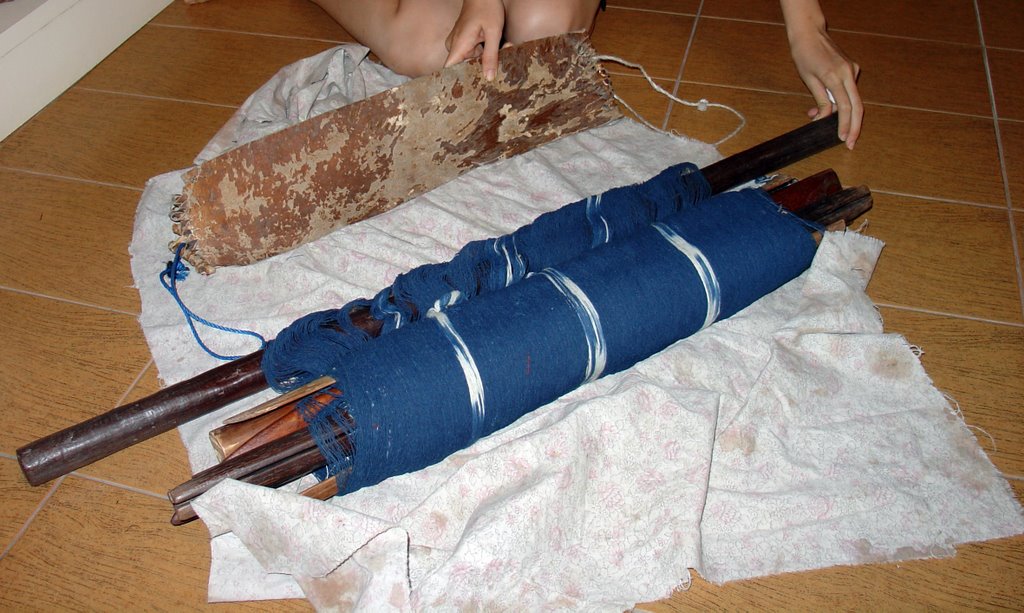
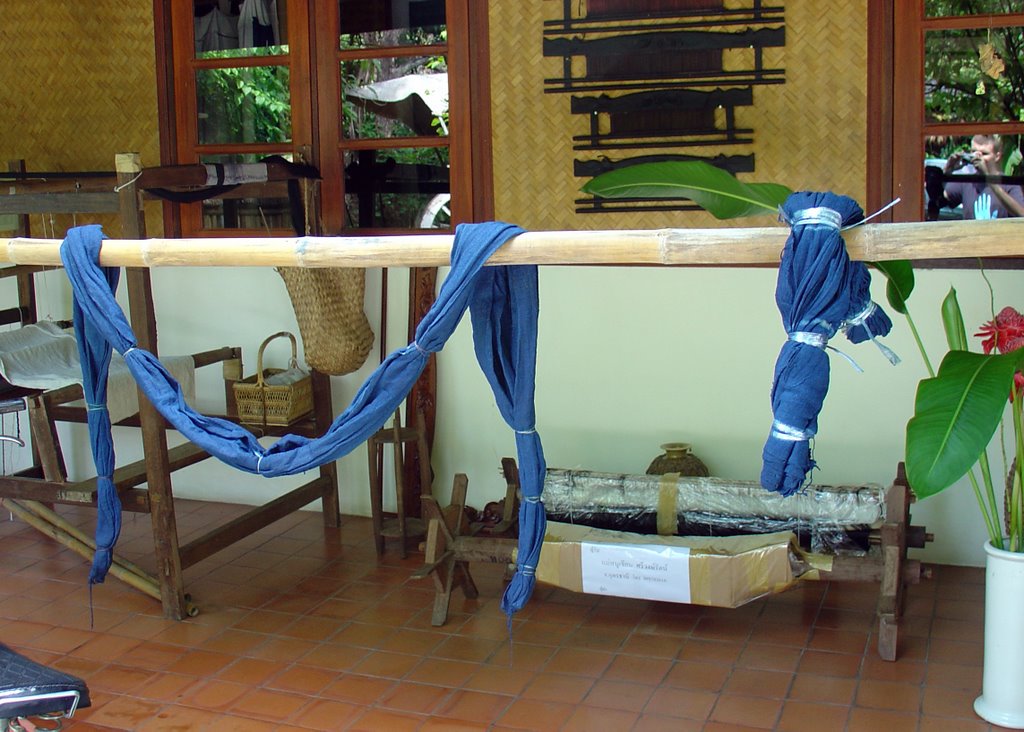
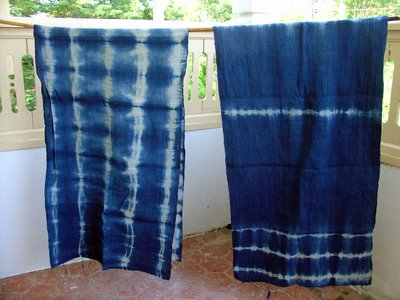
The workshop instructor didn't let anything go to waste. She had pans to catch every little splash from the beating, and the bundles that we removed from the water previously were dried in the sun to be burned later. The ashes are used to make ash water, the mordant for the dye. After beating the fresh buckets we began to dye our fabrics using an existing dye pot. Good indigo dye pots are maintained in a very delicate balance. Before dying anything, you have to scoop out a cup full of the dye to add back to the pot at the end to replenish the exhausted dye. It's a bit like making yogurt or sourdough bread, with cultures and all. Dane and I dyed handwoven cotton, pictured above, that we purchased from the studio. The fabric is narrow because it's woven on a backstrap loom.
On day 3 we filtered the water that we beat the day before through a tightly woven cloth to collect the indigo paste that settles to the bottom. It's this paste combined with ash water, sugar, an indigo culture, and a little alcohol that makes the dye. In fact, the dye is a dark olive green instead of blue. The fabric turns blue once it hits the air and oxidizes. It's a really amazing process.

These are the indigo bundles after soaking overnight.

The spent bundles are taken out in the sun to dry.

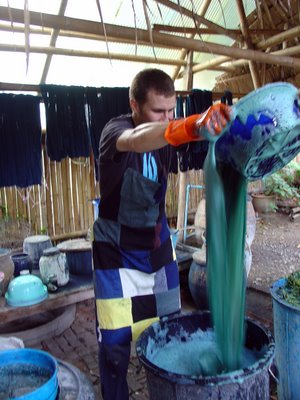
Dane beats builder's lime into the water to bind the indigo.

Dane prepares his fabric for dying by folding and tying it.

Another participant adds her fabric to the dye pot.
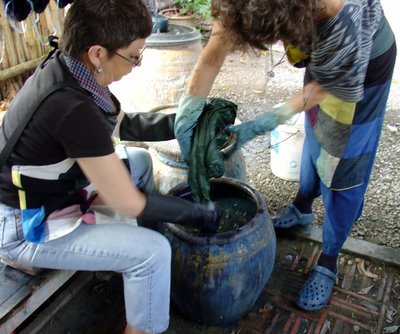
See how green the fabric looks when it first comes out.

Shaking the fabric helps to oxidize the dye which turns from green to blue.
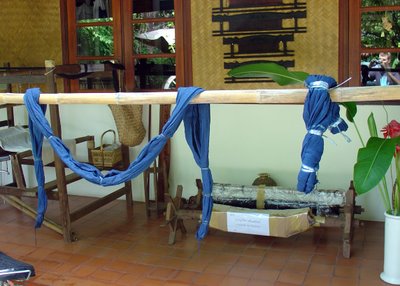
Here is our fabric dying at the studio before we untied it.

 For the embellished neckline I used remnants from my scrap basket.
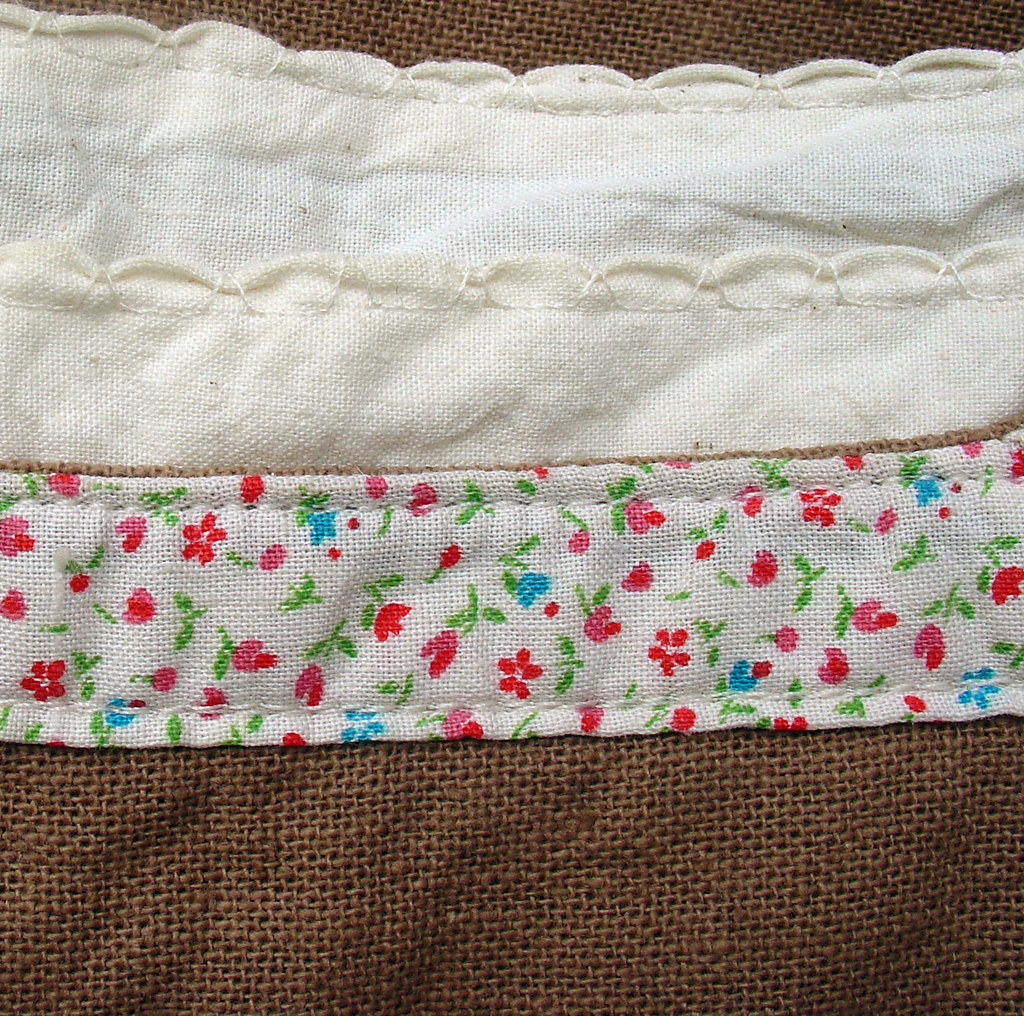 Here's a detail of the scallop trim which I made using one of the fancy stitch functions on my sewing machine.
 I made a cropped jacket with bell sleeves to go with this blouse from handwoven hemp I picked up at the border. I love the coarseness of the hemp, but with time it will soften.